
2 Oct 2026
Officials said “faith” in vaccine technology prompted decision to ease movement rules.

Chris Simpson
Job Title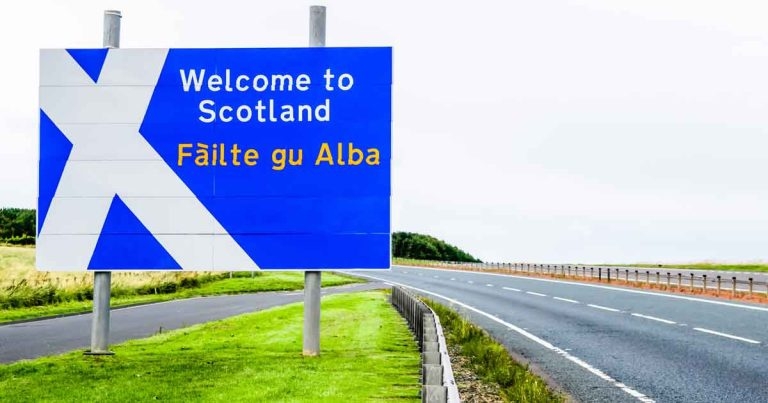
Image: © Stephen / Adobe Stock
The Scottish Government has warned bluetongue is “not going away any time soon” as it announced an expansion to the restricted zone in effect in south-west Scotland.
From Saturday 3 October, the zone will be extended to cover the whole of Scotland.
The Scottish Government said the extension of the zone was expected to make trading easier for stakeholders through the autumn as the licences currently required to move susceptible livestock into, within and out of the south-west zone would no longer be necessary.
Animals showing clinical signs of bluetongue will be restricted to their premises for 60 days.
The decision follows an agreement with key industry representatives, including the National Farmers’ Union Scotland, National Sheep Association, Scottish Beef Association, the Institute of Auctioneers and Appraisers Scotland and Quality Meat Scotland.
There have been 40 confirmed BTV-3 cases in Scotland; 36 in Dumfries and Galloway, two in Aberdeenshire and one apiece in Angus and South Lanarkshire.
Latest official figures show a total of 2,408 cases throughout the UK, with a further 961 still under investigation.
Agriculture minister Jim Fairlie said: “Extending the restricted zone to cover the whole of Scotland is a practical, sensible step that reflects the reality of the situation we now face.
“It recognises that bluetongue is not going away any time soon, while removing an administrative burden on farmers at what is a critical time in the trading calendar.
“This decision has been agreed with industry, who saw no reason to delay, allowing businesses time to plan accordingly.”
He added the removal of the need for movement licences does not change the Government’s long-term approach to tackling the disease and urged farmers to speak with their vets regarding vaccination.
National Sheep Association policy manager Michael Priestley said: “The National Sheep Association supports the decision to simplify trading rules at this time of the year as risk of transmission decreases in autumn as the Culicoides midge activity falls as temperatures fall.
“Farmers should be aware that there is a trade-off between the benefit of eased restrictions and a reduced bureaucratic burden that brings an increased risk of the virus spreading.
“This trade-off is being made because of the faith in the vaccine technology, which to date has offered excellent coverage to livestock in affected areas of the UK.”