
2 Nov 2026
Limited capacity poses risks to welfare and disease surveillance, the group’s president has warned.

Allister Webb
Job Title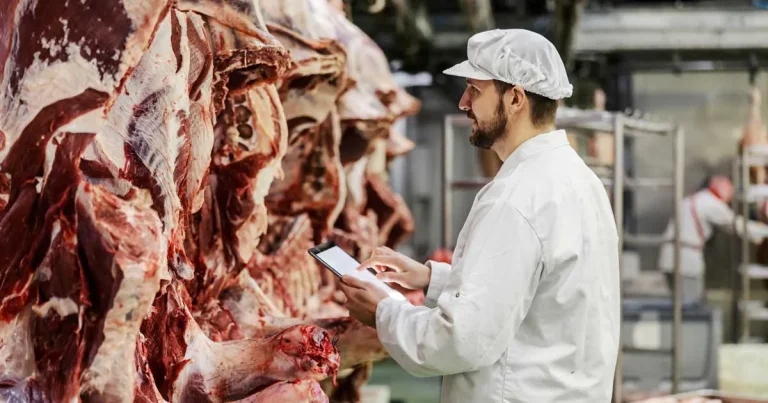
Image: Dusan Petkovic / Adobe Stock
The long-term decline of abattoir capacity is posing a “serious risk” to UK animal welfare and disease surveillance, the BVA has warned.
The group has urged ministers to work with clinicians and industry to guarantee sufficient coverage after a new coalition called for the facilities to be classed as “essential” infrastructure.
Association president Gwen Rees said: “Abattoirs are recognised as key points for detecting notifiable disease, and fewer abattoirs mean fewer points of animal health and disease surveillance.
“Robust biosecurity and effective surveillance are crucial to identifying threats early and responding quickly.”
She added: “Fewer abattoirs also raise welfare concerns, with animals potentially experiencing longer or more complex journeys before slaughter.
“It’s therefore essential that the Government recognises abattoirs as critical infrastructure for animal welfare and disease surveillance and should work with the sector and the veterinary profession to ensure there is adequate local provision.”
The comments came after an open letter signed by more than 150 organisations, businesses and individuals warned more than 90% of the UK’s abattoirs have closed since the 1970s, leaving only 200 currently in operation.
It also highlighted the results of a survey by the Sustainable Food Trust, which found around two-thirds of participants had experienced difficulties finding an abattoir and more than a quarter (29%) would be forced to close their meat business if their current abattoir ceased operations.
The letter, whose signatories include former RCVS president Professor Lord Trees, argued abattoirs should be classed as “essential economic infrastructure for rural and regional growth”.
It added: “Our message is simple: if we want UK farmers to produce our food, they need the infrastructure that enables them to get it to market. That infrastructure does not end at the farm gate.
“A viable network of local and regional abattoirs is fundamental to the livestock economy.
“Without it, farmers lose routes to market, local meat businesses become unviable, livestock travel further with implications for animal welfare, opportunities for local procurement diminish and economic activity becomes increasingly concentrated in large national supply chains.”