
27 May 2026
Researchers are now seeking the experiences of goat keepers after analysis revealed nearly 9 in 10 participating sheep farmers had seen the disease in their flocks.

Allister Webb
Job Title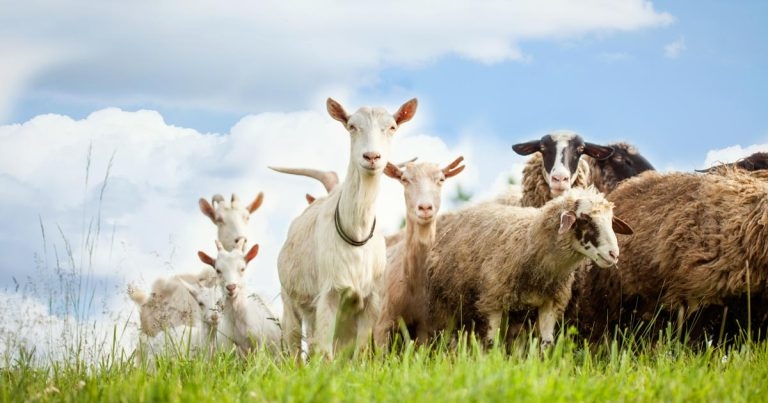
Image ©V&P Photo Studio / AdobeStock
Farmers have been urged to adopt a more proactive approach to a common viral disease that RVC-led analysis has suggested is still widespread on UK sheep farms.
Researchers are now surveying goat keepers for their experiences of orf after nearly 9 in 10 study participants said they had faced the condition within their flocks.
Despite that, fewer than one in four (23.8%) said they consulted a vet when the virus was suspected.
But Nettex livestock specialist Nia Williams argued veterinary advice was crucial to reduce the risk of secondary infection as she urged farmers to seek clinical advice
She said: “The most important thing is that farmers don’t overlook the disease, given the welfare impact it can have in flocks.”
More than 400 farmers took place in the latest study, published in Small Ruminant Research, with 88.8% reporting they had seen orf lesions in their sheep, including 11% who saw them within the preceding 12 months.
Around three-quarters (76.6%) reported they did not vaccinate their flocks against the virus, with most of those who did (66.3%) only vaccinating their lambs.
But the analysis raised particular concerns about the level of antibiotic usage linked to the disease, with 65.2% of cases reported as being treated with topical products, compared to 34.5% who used pain relief.
Co-author David Charles, international business manager for NoBACZ Healthcare, added: “Crucially, this data has shown just how much antibiotic is used for what is a viral disease, clearly showing areas where we can support education and behaviour changes to lead to improved antimicrobial stewardship.”
The study also highlighted a need for further research on the use of salt licks, which were reported as a treatment option by 13.6% of respondents.
Meanwhile, Mrs Williams joined the authors in advocating wider use of gloves, describing it as “paramount” when handling infected animals because of the disease’s zoonotic status.
Around 3 in 10 study participants (30.2%) reported having orf lesions themselves, including 18.2% who said they had had them within the previous 12 months.
But while nearly half (48.9%) reported sometimes wearing gloves when handling animals, the proportion that didn’t (33.7%) substantially outnumbered the 17.3% who said they did.
The goat keeper survey is open now online.