
21 Oct 2026
National Sheep Association officials say the findings highlighted the need for further measures to reduce the risk of future outbreaks.

Allister Webb
Job Title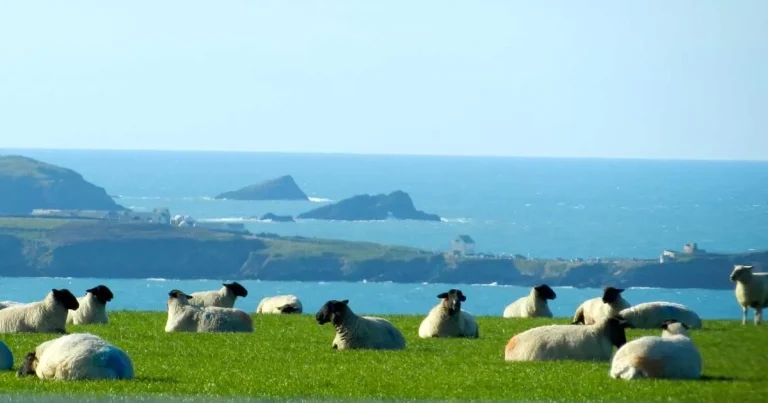
Sheep on the coast near Newquay, Cornwall. Image: cjkpics / Adobe Stock
More than one-in-four sheep farmers have been left with unprotected flocks during the current bluetongue outbreak because they could not obtain vaccines, according to new analysis.
National Sheep Association (NSA) officials said the findings showed the need for more to be done to help prevent future outbreaks, amid strong reported demand for vaccination next year.
More than 1,400 farmers took part in the survey, which ran over several weeks during August and September.
Nearly two-thirds of participants (65%) said they “definitely” planned to vaccinate their flocks against the BTV-3 strain in 2027.
But 40% said they had not been able to obtain vaccine supplies despite their efforts to do so. Among them, 70% – equating to around 28% of all survey participants – reported their sheep had been left unprotected as a result.
Other impacts included extra time and management stress, which was reported by 46% of participants who had been unable to obtain supplies, increased veterinary costs (18%), changed movement or trading plans (12%), sheep lost to disease (10%) and lost sales or market (9%).
One respondent described a “huge waiting list” with “no sign of an early arrival”, while other highlighted challenges included bottle sizes being too large for smaller flocks, insufficient quantities for larger operations and problems obtaining second doses of the same vaccine brand.
The association acknowledged that its findings were obtained during a rapidly expanding outbreak and at a time of “acute disruption in supply”.
But communications manager James Saker said: “The responses to the survey show more can be done to help prevent outbreaks in the future.
“Thanks to the volume of responses, there is plenty of opportunity to dig deeper into the data and identify other trends.”
The survey also indicated that nearly three-quarters (73%) of respondents said they would prefer to buy vaccinated sheep with a similar proportion (74%) describing themselves as open to ordering vaccine in advance through their vet.
The association, which organised the survey in a bid to help gauge demand and prevent future supply shortages, estimated that level of interest would equate to around 350,000 vaccine doses.
Chief executive Phil Stocker said the figures emphasised the need for early discussions between farmers, vets and manufacturers to ensure adequate supplies are available.
He added: “For farmers, vaccine planning must be treated as a routine part of the flock health plan.
“Vaccines come with a cost but, as the results show, there is demand for vaccinated animals at sales and, with the losses caused by BTV-3 this year, most would say the investment in vaccines has been financially worthwhile.”
As of 6 October, 2,780 bluetongue cases had been confirmed across the UK since the start of the current virus season in July, while a further 722 incidents were under investigation.