
15 May 2026
A project looking for ways to modernise the tools used in testing cattle could increase confidence in the system and improve disease controls, scientists claim.

Allister Webb
Job Title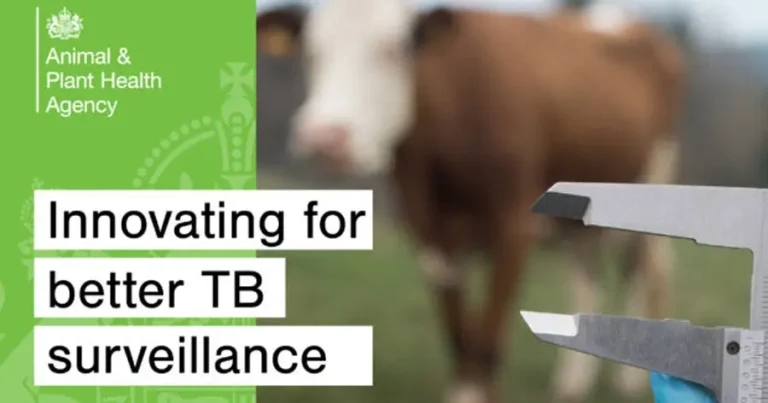
A new project to modernise bTB testing in cattle, by developing new tools that could enable substantial improvements in disease surveillance, has been outlined.
Scientists from the APHA, the Roslin Institute and the UK Agri-Tech Centre believe they now have a “clear roadmap” to improve the existing skin test through the development of purpose-built callipers.
But they acknowledged many hurdles still need to be overcome as they called for “collective action” to help the work succeed.
Details of the project have been outlined in a newly published APHA Science Blog, which argued the callipers currently used for bTB testing would have been recognisable to vets and farmers working nearly a century ago.
Workshops with clinicians and other stakeholders identified design, improved measurement capacity, data capture and sharing as key priorities for the development of any new device.
Prototype development and contribution to existing reporting systems have been highlighted as areas for potential work arising from the project.
Camille Harrison and Susanne Frost, from the APHA, said they were also encouraged by the “consistent insights” which emerged from the consultations.
UK Agri-Tech Centre animal health specialist Bethan John added: “This study provides a clear roadmap for modernising the bTB skin test, but success will depend on coordinated action.
“Aligning technology development with policy, funding and national implementation will be essential to ensure consistency and build long‑term confidence in surveillance outcomes.
“With the right support, we can deliver a more accurate, transparent and future‑ready testing system.”
Roslin Institute professors Rowland Kao and Fiona Houston said new tools would also need to overcome potential challenges of robustness and reading variation that may be connected to immune response or different breeds’ skin thickness.
But they added: “These challenges are worth overcoming; the SICCT [single intradermal comparative cervical tuberculin] remains central to bTB control, and any improvement in the precision of skin measurements and reduction in the potential for human error are important steps towards more effective disease control and greater trust in the testing system.”