
3 Sept 2026
Balloon offers a minimally invasive, lower cost and potentially lower-risk alternative to urethral stents or cystotomy tubes.

Chris Simpson
Job Title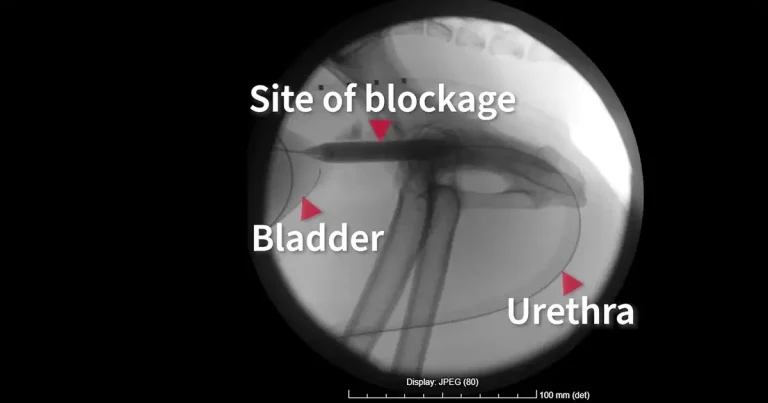
Balloon dilation was used to resolve a urethral blockage caused by a prostatic tumour.
The University of Edinburgh’s Hospital for Small Animals is trialling balloon dilation in dogs with urethral narrowing or blockages after successfully testing it in one of its patients.
The balloon serves as a potential minimally invasive alternative to urethral stents or cystotomy tubes.
It is said to offer a lower cost for clients and potentially reduce the risks of long-term urinary incontinence and recurrent urinary tract infection in patients, by preserving natural muscle control of the tract and because no foreign material is left within the urethra.
The trial follows a successful case study of a dog which benefited from balloon dilation to resolve a urethral blockage caused by a prostatic tumour.
The dog, a nine-year-old neutered male, was referred from the hospital’s oncology service to its internal medicine service with progressive lower urinary tract signs including stranguria and an inability to empty the bladder effectively.
A CT scan confirmed progression of the tumour and partial urethral obstruction.
While concurrent bacterial cystitis was diagnosed and treated, medical therapy was unsuccessful in reducing urethral spasm.
As stenting was considered inappropriate due to clinical priorities including maintaining continence, clinicians instead used a urethral balloon dilation catheter to distend the obstructed area and dilate the urethra.
Balloon dilation being used to resolve a urethral blockage caused by a prostatic tumour.
With fluoroscopy confirming improved patency during the procedure, the dog was discharged the following day with ongoing medical management for urethral relaxation and within five days his owners reported marked improvements in urine stream and reduced straining, and resolution of urinary incontinence.
Julien Dandrieux, RCVS specialist in small animal internal medicine at the hospital, said: “This case is an example of how the multidisciplinary approach we apply to the care of patients referred to our hospital can be beneficial to patient welfare.
“Although this case was palliative, we are keen to see how balloon dilation can help canine patients with urethral blockages in the future.”