
15 Jun 2026
Cambridge-led studies on managing canine IVDD named among most read journals in 2025.

Chris Simpson
Job Title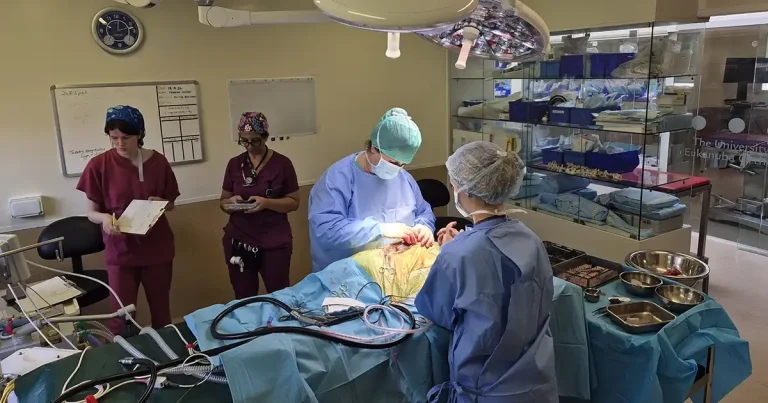
A leading academic and vet has hailed the “extremely encouraging” recognition his studies on intervertebral disc disease (IVDD) have gained after they were named among 2025’s most read veterinary journals.
Paul Freeman, principal veterinary neurologist at the University of Cambridge’s Queens Veterinary School Hospital (QVSH), received certificates from the Journal of Veterinary Internal Medicine (JVIM) and the Journal of the American Veterinary Medical Association (JAVMA).
His 2024 paper, “Recovery of ambulation in small, nonbrachycephalic dogs after conservative management of acute thoracolumbar disk extrusion”, was among the top 10% most read publications in JVIM last year.
Meanwhile, “Percutaneous enzymatic chemonucleolysis of intervertebral disks appears safe and effective in treatment of acute-onset paraparesis and paraplegia in small dogs” was among the top five most read papers published in JAVMA.
The paper documented the trial of a percutaneous intra-discal chondroitinase injection which delivers an enzyme directly to damaged intervertebral discs, to dissolve the central part of the spinal disc and relieve pressure on the spinal cord.
The QVSH became the first in the UK to begin offering the pioneering minimally invasive treatment in small dog breeds.
It has treated more than 170 dogs since, with a recovery rate of 89% for deep pain positive (grades 3 and 4) and 41% for deep pain negative (grade 5) dogs.
Professor Freeman, an RCVS and European specialist in veterinary neurology, said: “It’s extremely encouraging to see this level of engagement with our work from the international veterinary community.
“IVDD is one of the most common neurological conditions we see in practice, and historically there has often been a strong emphasis on rapid surgical intervention.
“These studies suggest there may be a broader range of effective management options available for selected cases, and it’s positive to see that message reaching clinicians worldwide.”