
3 Dec 2025
RVC scholars compare the prevalence of hair coat disorders in ragdolls and Persians against data for all cats in the UK.

Chris Simpson
Job Title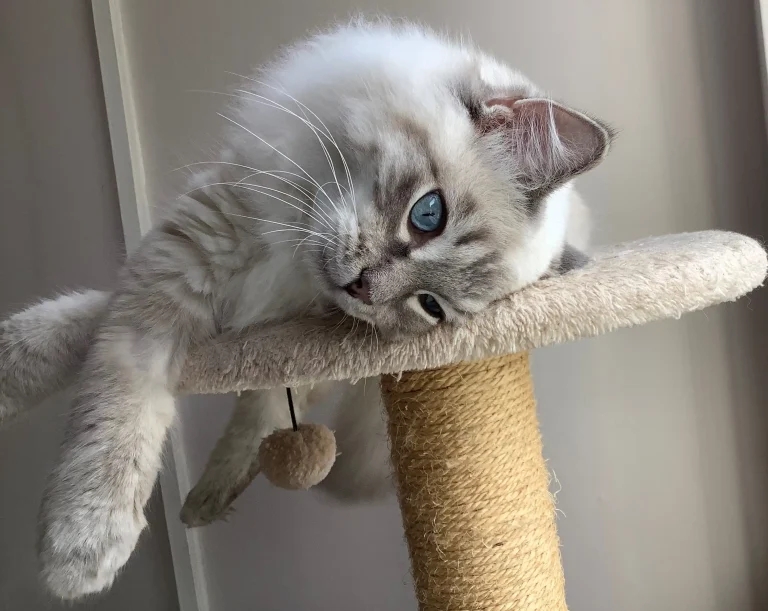
Research reveals ragdoll cats have increased risk of issues such as matting.
A vet has suggested long-haired cats should be considered as having an extreme body conformation due to their predisposition for haircoat disorders.
A new RVC study analysing college VetCompass data on disorders in the semi-longhaired ragdoll cat revealed they had increased risk of issues such as matting.
Ragdolls had a 4% prevalence for haircoat disorders, which the authors compared to a similar study of all cats in the UK in which such disorders were recorded in 2.6% of cases.
They also noted another similar study found haircoat issues were the most common disorder in Persian cats – one of two long-haired progenitors of the ragdoll breed – with a prevalence of 12.7%.
The authors continued: “This high prevalence in Persian cats suggests that the long-haired phenotype should be considered an extreme conformation in cats and therefore should no longer be selected for if the goal is to select for good innate health.”
Lead author Dan O’Neill said: “An innate health function that all cats should be able to perform is to self-groom themselves.
“If humans are selecting for extreme coats that are so long that the cats cannot maintain their own hygiene and need to be artificially groomed and that commonly leads to matted coats, then this is an extreme conformation and should be questioned on whether this is still acceptable in a modern world where the welfare of the animal is seen as being of high importance.”
He added: “The public love cats and dogs. Once there is an awareness of the welfare costs from extreme conformation, I am confident that the public will go back to celebrating natural body shapes in dogs and cats and no longer see extreme conformations as [something] cute or desirable.”
The latest study examined a random sample of 2,025 ragdoll cats under veterinary care in the UK in 2019, of which 1,241 had at least one disorder recorded.
The most common disorders recorded were periodontal disease (8.84%), diarrhoea (7.11%), obesity (6.91%), overgrown nails (5.68%) and dental disease (5.58%).
The authors noted the ragdoll’s diarrhoea and vomiting (4.05%) prevalence is higher than in all UK cats (2.9% and 3.2% respectively), suggesting the breed may be predisposed to enteropathy.
Enteropathy (13.48%) ranked second in the most common disorder groups after dental disorders (14.52%) and ahead of skin (7.75%), obesity (6.91%) and claw/nail (6.17%).
The most common causes of death were kidney disorders (21.18%) and poor quality of life (12.94%), with 133 ragdolls dying during the study period at a median age of 12.85 years.
Dr O’Neill added: “The results show that pure breed ragdoll cats live as long as their random-bred ‘moggie’ cousins and that owners similarly need to ensure good dental care, flea treatment, nail care and weight control but the ragdolls need more grooming care.”