
29 Sept 2026
Clinicians in Glasgow are pioneering treatment for dogs in the UK and leading work to explore the extent of the problem in other species.

Allister Webb
Job Title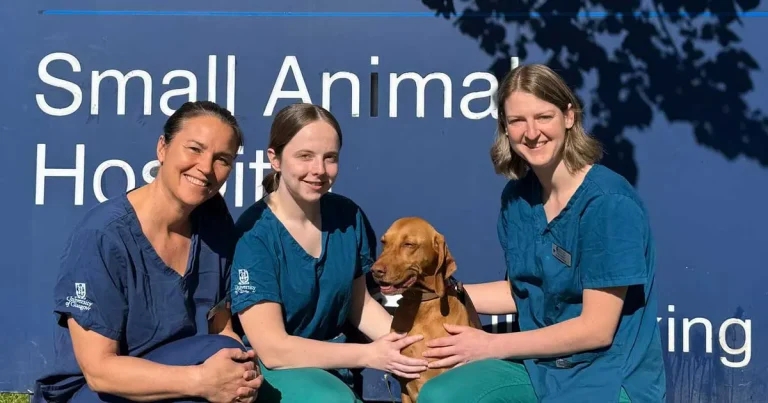
Pictured (from left) professor Ana Rostaher and SVNs Rebecca Hattie and Kerry Burns, with Amber the dog, outside the University of Glasgow Small Animal Hospital. Image: University of Glasgow
An immunotherapy treatment originally developed for humans is now offering a “major advance” in care for dogs with severe insect sting allergies, a senior vet has claimed.
Clinicians at the University of Glasgow’s Small Animal Hospital said interest in the Hymenoptera venom immunotherapy (VIT) technique is growing following successful use on several canine patients.
But they are also working with a diagnostic laboratory on a related project examining the current extent of the problem across Europe and among different species.
Ana Rostaher, a professor of veterinary dermatology at the university, believes the therapy will become “a much more widely recognised and routinely available treatment option”.
She said: “Venom immunotherapy represents a major advance in how we can manage severe insect sting allergies in dogs.
“This treatment offers a proactive way to change that risk profile and provides owners with an option for further peace of mind for those animals who are severely allergic to insect stings.”
The hospital is the only site in the UK, and one of only a few globally, currently offering the VIT therapy, which uses increasing doses of bee or wasp venom to train the immune systems of affected dogs.
The treatment, which is administered following allergy testing and an induction period, can continue for several years, although the hospital said its research indicated many patients develop “strong protection” against repeated anaphylaxis.
Another study also found incidents of sting reaction were not confined to the summer months, with only January and December passing without cases being recorded.
Claire and Matthew Preece, whose dog was the first undergo the treatment at Glasgow, said they had sought the treatment to “regain a sense of control” after their vizsla, Amber, became seriously ill following a bee sting at their home in Stratford-upon-Avon in 2021.
Prof Rostaher said their story showed the importance of the treatment because of the often severe and distressing nature of allergic reactions for owners and their families.
She added: “Venom immunotherapy offers a way not just to treat the condition, but to prevent the next emergency before it happens.”
Although only a small number of patients have been treated since the Glasgow programme began, Prof Rostaher said interest in the treatment was “steadily growing” both here and abroad.
The hospital has already supported a vet and dog owner in the south of the UK with local treatment, while Prof Rostaher has also worked with Hungarian clinicians on what is thought to be the first immunotherapy treatment of a horse with similar sting allergies.
Although dogs appear to be most commonly affected, she said cases were also being identified in both horses and cats.
Meanwhile, a major pharmaceutical company is understood to be developing venom allergen products, which it is hoped will further raise awareness and widen treatment access.