
3 Nov 2026
Wolfgang Dohne DrMedVet, MRCVS reviews this event which finally went ahead after the original was postponed.

Wolfgang Dohne
Job Title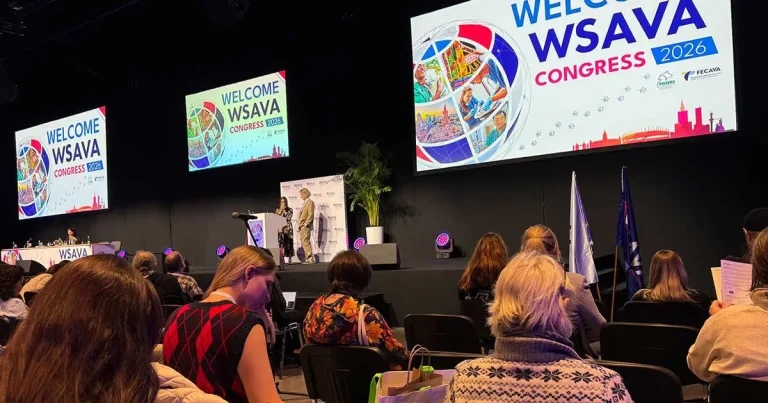
There was a big, fat smile and a few tears on the faces of both organisers and delegates when the WSAVA 2026 Congress closed, and the baton was passed on from Warsaw to New Delhi for the next world congress for companion animal veterinary medicine.
It had truly been a long and hard journey making this event happen, including overcoming many small obstacles plus a global crisis, but in the end, the result has been so worthwhile and memorable.
Originally scheduled for the autumn of 2020, the hard-working Polish organising team had seen all their efforts dashed by the COVID-19 pandemic and the resulting global shutdown. A much-reduced all-online event was held the following year, but the organisers never gave up their hope of finally welcoming the companion animal veterinary world as a guest in their own capital city.
With the event visiting Europe only every three (and now only every four) years, it was first Lisbon’s turn in 2023, before Warsaw was back on the congress schedule as the hosts for 2026.
But it was worth the wait.
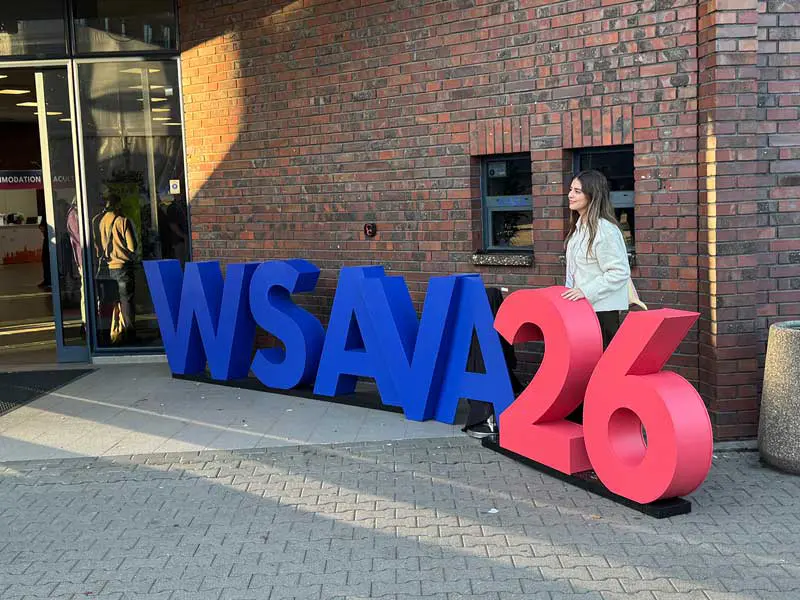
Far exceeding all expectations, with nearly 6,000 registrations and participants from more than 100 countries, this was once again a new attendance record for a WSAVA Congress outside of China and a new record for the world congress in Europe.
Debbie Gray, WSAVA’s chief learning and development officer, put together a comprehensive scientific programme with up to 11 parallel streams, including two Polish and a dedicated nursing stream.
Nearly all lectures benefited from simultaneous translations into English or Polish, and most of them were delivered in a “silent conference” format, giving the congress halls a more relaxed and quiet feel. If individual halls were reaching their capacity, a lot of delegates elected to retreat with their headsets to one of the many chill zones, where they could enjoy the live audio recording together with the relevant slides, from the comfort of a bean bag, often accompanied by a cup of artisan coffee from one of the larger exhibition stands.
A dedicated congress app helped delegates to plan their personal CPD schedule.
Individual conference streams were dedicated to anaesthesia and pain management, to feline medicine, ECC and diagnostic imaging, to geriatric and end-of-life care, to wellness and mental health, as well as to virtual veterinary care.
Interactive sessions and discussion rounds addressed clinical decision trees for common types of neurology patients, the ethics of end-of-life care, or the future of veterinary medicine with new technology.

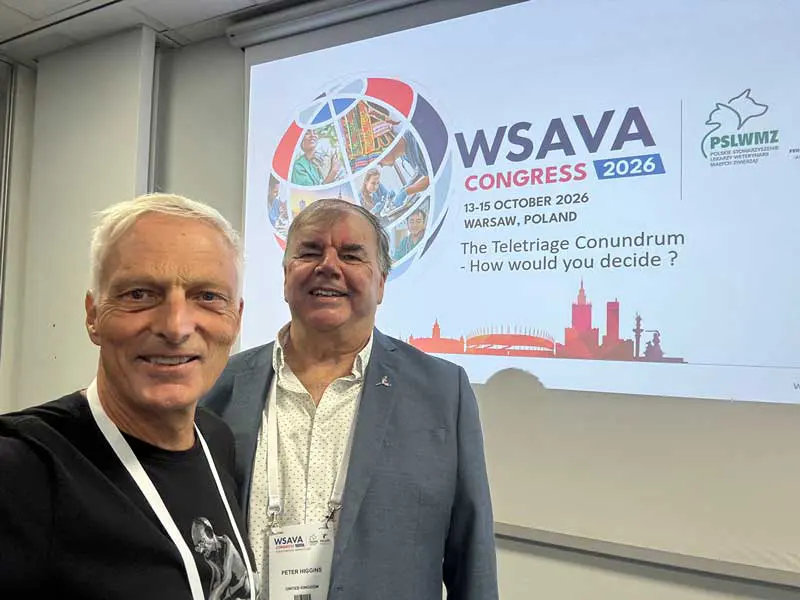
Delegates from the UK made up the third-largest group (after delegates from Poland and, interestingly, from Mexico), and as always with international congresses, the UK was once again well represented in the form of speakers and moderators.
Abbe Crawford gave a number of presentations on the right approach to spinal trauma cases and on the emergency management of seizure patients. Abbe also addressed the approach to dogs with neck pain and how to diagnose dogs with neuromuscular weakness, which included a number of videos of her own caseload.
Fergus Allerton and Julian Hoad gave well-attended presentations on aseptic technique and how to minimise surgical site infections, and Julian shared in addition to this his knowledge on the surgical management of linear foreign bodies, planned lump removals and reproductive problems, while Fergus elaborated in his presentations on antimicrobial stewardship and faecal microbial transplantation. In addition to this, Fergus gave hands-on tuition on a couple of flexible endoscopy workshops.
Jill Maddison and David Church took delegates over four lectures, as part of the Federation of European Companion Animal Veterinary Associations stream, on an interactive medical mystery tour through the complex world of their internal medicine cases. When Matt Rendle explained how to keep avian anaesthesias safe, Hannah Capon elaborated on alternative strategies for the treatment of arthritic patients, when Nick Bacon introduced delegates to the WSAVA surgical oncology checklist to maximise patient care, and when Jo Murrell gave useful advice on post-surgical pain management, on the use of fentanyl, ketamine and alpha-2 agonists, the audience could have been forgiven for having the impression to be on a large veterinary conference in the UK, rather than in the heart of Europe.
This show of breadth of knowledge, combined with a willingness to share it freely, was well received by this assembly of colleagues from around the world and just underlined how important it is to attend international events to exchange and to pass on knowledge.
The scientific programme was complemented by a number of workshops which, including the previously mentioned sessions on flexible endoscopy, covered dental radiography, virtual surgical planning and 3D printing in oral surgery, practical psychopharmacology, feeding tube and central IV line placement and practical guidance on the stabilisation of dyspnoeic patients.
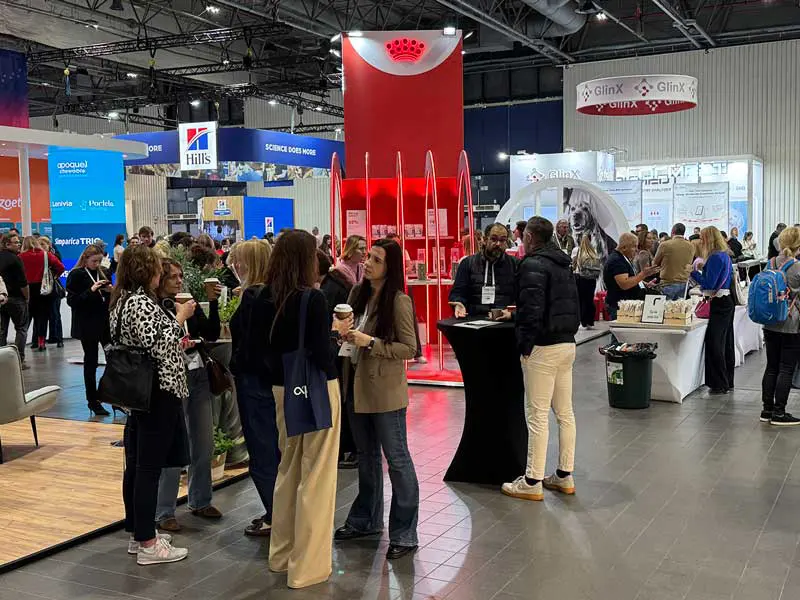
The large trade exhibition running alongside the lecturing theatres and spreading over two halls proved so popular that it was already sold out several months in advance. What was noticeable was the ever-increasing presence of companies from the Far East, providing new assays and technically fast advancing diagnostic tools, many of these now with the integration of some sort of artificial intelligence support.
Delegates not exhausted enough from visiting the exhibition and attending the scientific programme were able to run off any spare calories at the Fun(d) Run in aid of the ProSalus Foundation at 6:30am on the second congress day, or to dance them off at the party night at the Caribbean-themed Teatro Cubano.
With the world congress not due to return to a European venue before 2030, WSAVA Congress 2026 will stay for a long time in the memories of those who were lucky enough to take part in the event in Warsaw; for those who do not want to wait that long, the super early bird registrations for WSAVA 2027 have not long opened.
This article appeared in Vet Times (3 November 2026), Volume 56, Issue 44, Pages 16-17