
24 Jun 2026
Rhodesian ridgeback Winston’s import history helped guide vet team to accurate diagnosis.

Chris Simpson
Job Title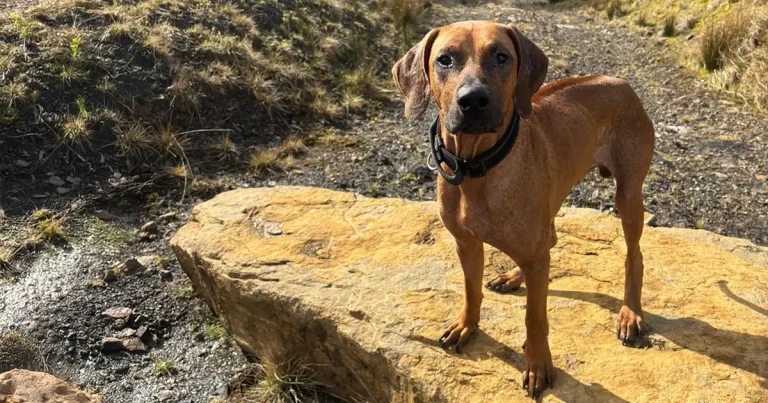
Winston, one month after treatment began. Image: R(D)SVS)
A vet has hailed the importance of checking pets’ travel history after helping a dog imported from Spain recover from leishmaniasis.
The team at the Royal (Dick) School of Veterinary Studies has shared tips for clinicians who suspect leishmaniasis in a patient after treating Winston, a dog referred to the Hospital for Small Animals’ internal medicine service.
The one-year-old Rhodesian ridgeback was referred due to progressive loss of body condition over several months and skin lesions including periocular alopecia.
The team suspected leishmaniasis after discovering Winston had been imported from Spain at 15 weeks of age in conjunction with his other symptoms.
An abdominal ultrasound showed enlarged spleen and lymph nodes, and cytological assessment of lymph node fine needle aspirates identified rare Leishmania parasites.
Winston was prescribed allopurinol and miltefosine to reduce parasite burden and activity and placed on a low-purine diet, and after four weeks he had gained around 10kg and is said to have shown marked clinical and biochemical improvement.
The Royal (Dick) team has urged fellow clinicians to obtain travel and import history in suspected leishmaniasis patients and use differential diagnosis, as the disease is able to mimic dermatological, renal, immune-mediated and neoplastic disease patterns.
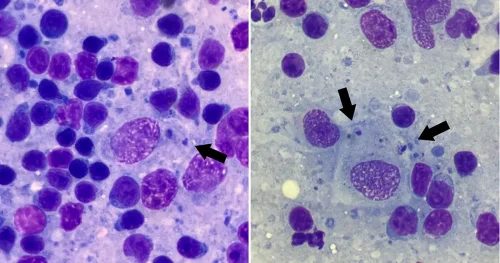
The team also recommended vets confirm diagnosis when possible, noting direct parasite identification in tissue with fine needle aspirate cytology can be decisive, and to monitor long-term to control ongoing parasite activity and assess organ impact such as kidney function.
Silke Salavati, RCVS specialist in internal medicine and head of the internal medicine service, said: “This case highlights that collating a detailed travel and import history can be vital in uncovering hidden causes of chronic illnesses.
“I am proud of our team of specialist vets who, through their international expertise, careful clinical investigation and dedication to finding a diagnosis, were able to help Winston.”