
1h ago
Percentage of owners reporting microchipping their cats has fallen two years running despite new legal requirements in England and a significant increase in the feline population.

Chris Simpson
Job Title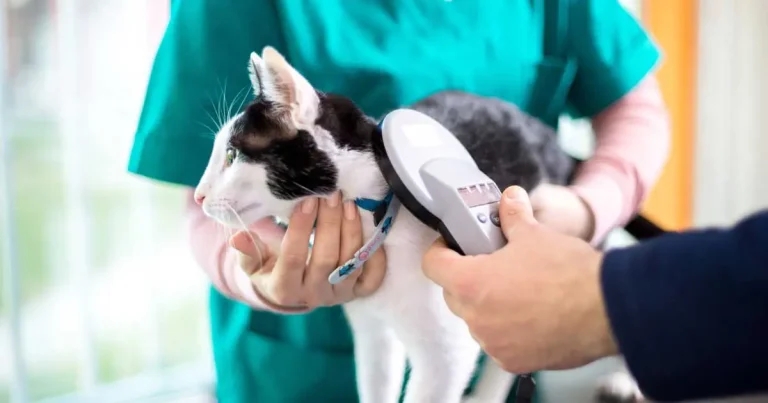
Image: luckybusiness / Adobe Stock
Microchipping in cats has continued to fall in the UK two years on from legislation making it a legal requirement in England, a leading feline welfare charity has revealed.
Cats Protection shared the results of the seventh edition of its annual Cats and their Stats report, the surveys for which had more than 10,000 participants.
Despite the law change for England in 2024, when it sat at 75%, microchipping has slightly fallen year-on-year since and now sits at 73%, with 23% of owners reporting their cats are not microchipped and the other 4% unsure. At the same time, the number of owned cats in the UK has increased significantly, from 10.2 million in 2025 to 11.7 million this year, leaving more than 3.1 million cats potentially without a microchip.
Owners reported their cat not going outside (22%), not straying far (20%) and having a collar instead (15%) as their most common reasons for not having their pet microchipped.
Cats Protection senior veterinary engagement manager Izzy Hocking said: “Microchipping remains one of the most effective and reliable forms of permanent identification available for cats.
“Every year, veterinary teams, charities and rescue organisations encounter cats that are clearly owned, but cannot be reunited with their families because they are not microchipped or because registration details are no longer accurate.
“Veterinary professionals are trusted by owners and uniquely placed to raise awareness of the benefits of microchipping, address common misconceptions and help more cats find their way home if they become lost.”
Asked for the first time what would encourage them to get it done, 28% of respondents who have not microchipped their cat said vet recommendation, with 23% desiring clear information about the benefits and 22% wanting more information about the safety of technology.
The charity’s chairperson of trustees, Kit Sturgess, said: “Veterinary recommendations are still one of the most effective ways to encourage owners to take action on key areas of cat care such as preventive health care, neutering, microchipping and behaviour.
“Trusted advice from veterinary teams helps owners make informed decisions about their cats’ care, contributing to better health and welfare outcomes.”
Neutering and up to date vaccination numbers both came in at 79%, although the former has fallen from 82% last year and 88% in 2020, while the latter has risen from 77% last year and 69% in 2021.
Vet registrations remain high at 93%. Although that has fallen by 1 per cent in 2025 – leaving around 820,000 owned cats unregistered – more owners reported routinely going to the vet since last year (67% up from 64%).
More than half (56%) said they did not visit the vet as often as they would like, however, with the most cited reasons being cost (25%) and the visit being too stressful for the animal or owner (24%), while 26% felt the cost of owning a cat had increased in the last year.
More than half (52%) of cats acquired in the past 12 months were pedigree or purebred. Cats Protection said the proportion – which has risen considerably in recent years – had “plateaued” this year, as had the percentage of cats that were purchased (38%) compared with being adopted.