
25 Mar 2026
Global chief medical officer Richard Goldstein appealed for “context” in the debate around Librela – and said monoclonal antibodies would become “a huge part” of future care.

Allister Webb
Job Title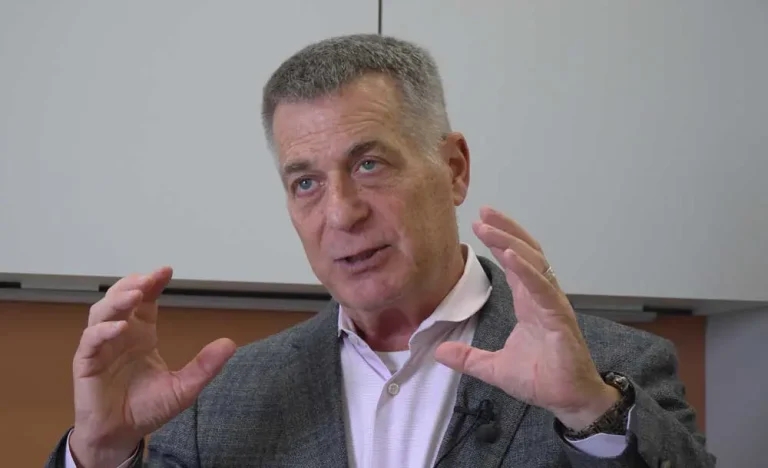
Zoetis global chief medical officer and head of medical affairs Richard Goldstein, pictured at a press event in Berlin in 2025.
A senior vet has suggested the core element of a high-profile canine osteoarthritis (OA) treatment could also deliver major care advances for other diseases in the coming years.
Zoetis global chief medical officer Richard Goldstein appealed for “context” in the debate around Librela amid ongoing demands for tougher action from UK regulators.
But he argued that monoclonal antibodies of the kind used in the drug would become “a huge part” of care, as he urged a focus on proactive, rather than reactive, treatment.
Dr Goldstein said: “That is a better medicine. It’s better for the pet owner. It’s definitely better for the pet and for the veterinary practice, as well.
“It keeps patients happy and healthy for a longer period of time.”
Alongside Librela, a longer-lasting monoclonal antibody, Lenivia, has already been given regulatory approval for OA treatment by Canadian and European regulators.
The model is now also being applied to other major health concerns including cancers and chronic kidney disease (CKD). Zoetis has identified both as areas where it hopes to bring new products to market, which can be used by general practitioners without specialist referral, in the short or medium term.
Dr Goldstein said the company had seen “global enthusiasm” among specialists when discussing its CKD plans, while its cancer work is focusing on some of the most common forms of the disease.
He added: “That will be a tremendous improvement in what’s out there and will help a lot of dogs and cats around the world.
“This disease is often a kind of immediate death sentence or very short-term death sentence. If we can give them good quality of life for an extended period of time, that will be a tremendous gift.”
But while a legal action against the company was dismissed by a US court last year, fears have persisted about the level of adverse events linked to both Librela and its feline equivalent, Solensia.
Documents seen by Vet Times indicate that complaints have now been lodged in relation to individual clinicians’ use of Librela to treat OA cases in the UK and Ireland.
However, Dr Goldstein stressed vets’ obligation to treat animals in pain when they are presented in practice, though he acknowledged that conversations about how to treat that pain were not always easy.
He also insisted Zoetis was taking every adverse event linked to Librela “very, very seriously” and would support further studies on any of its products. But with more than 34 million doses of the drug having been distributed globally and no adverse event classed above a rare frequency, he argued that a wider perspective is also necessary.
He said: “We also need the context, and the context is the millions and millions and millions who are doing well and have improved quality life because of Librela.”