
17 Aug 2026
New national emergency initiatives are needed to protect species and improve emergency responses, a welfare group has warned.

Allister Webb
Job Title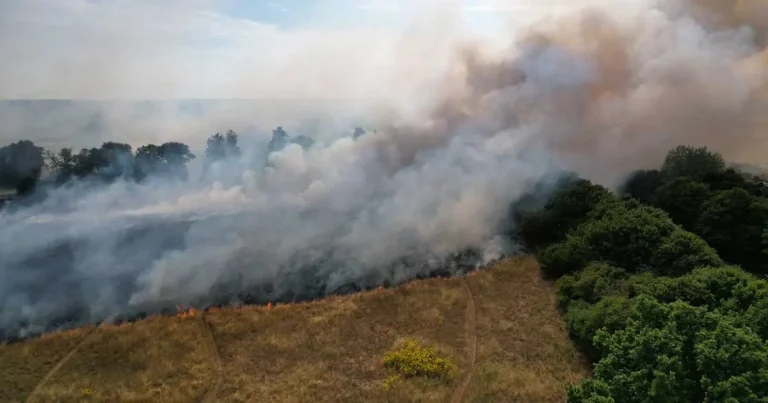
Image: Air Video UK / Adobe Stock
A welfare group has urged the UK Government to set up a new rescue service and £10 million disaster response fund to help animals affected by wildfires.
The Center for Wild Animal Welfare (CWAW) fears wild species have become the “forgotten victims” of blazes across England and Wales this summer, despite the efforts of local emergency crews.
The group has now outlined a five-point action plans that it says ministers should adopt to improve future emergency responses.
Director Richard Parr said: “Disasters which affect wild animals are likely to become more frequent in coming years, so we need a more comprehensive and joined-up approach to prepare and respond to them.”
The group’s plea followed an emergency alert on the risk of wildfires, which was sent to phones in England and Wales on Friday evening (14 August).
Speaking on a visit to one of the worst affected areas in the West Midlands earlier in the day, prime minister Andy Burnham warned the country was “a tinderbox right now” as he urged the public not to light anything at all in an outdoor space.
The Government has also announced plans for a national wildfire summit to take place later this year, while nearly £100 million is set to be invested in new fire service training and specialist equipment.
But the CWAW fears the number of animals likely to be at risk from wildfires, and the range of their medical needs, meant current levels of preparedness were insufficient.
It argued the response fund could enable emergency payments to local rescue organisations to cover veterinary and housing costs and the proposed rescue service should be modelled on a similar system that is already in place in Australia.
The group has also recommended the integration of wild animal welfare into emergency planning legislation, stockpiling of emergency medical supplies and the building of “fire refuge” habitats such as ponds and deep burrows where animals could shelter in future fires.