
6 Jan 2026
Wolfgang Dohne DrMedVet, MRCVS recalls a visit to Timisoara and the differences – and similarities – compared to UK clinics.

Wolfgang Dohne
Job Title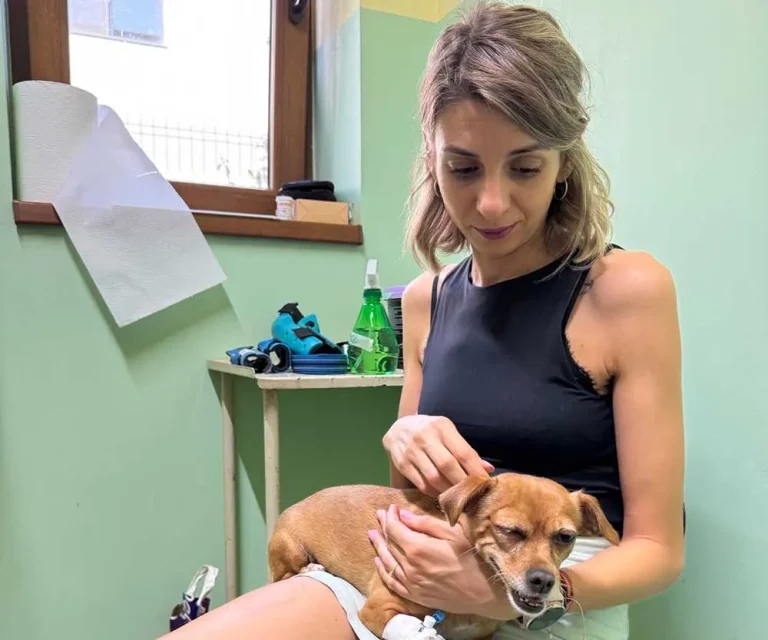
Robert Popa was indignant when I entered his consulting room in Timisoara, in the most western corner of Romania, and the image I saw was just all too familiar to me:
Robert had just examined a one-year-old terrier with a non-weight bearing lameness that had for all of two weeks not responded to rest and oral pain killers. Only reluctantly his owners had decided to seek a second opinion.
While already a limited clinical examination had been anything but encouraging, a set of radiographs had confirmed the diagnosis Robert had feared when his patient had limped through the door.
Presenting a classic example of why it is important to take, whenever possible, two or more x-rays of an area of concern, the first – cranio-caudal – film had implied a seemingly normal alignment of the bones, while the second film had unmistakably confirmed the presence of a distal diaphysial femur fracture.
Over the preceding two weeks, callus formation and muscle contracture had managed to immobilise the break somewhat, but one could just imagine, in how much pain this dog must have been. What had frustrated Robert most was not only the time it had taken to get the condition diagnosed, but the reluctance of the owners, who had arrived in a shiny new Bavarian SUV, to consent to the long overdue surgical management of this injury for the very reasonable fee of €400 or the equivalent of a couple of tank fillings of their car.
“Okay, we will think about it,” was their not very encouraging reply, before leaving the clinic with their still half-sedated canine companion. While the cost of veterinary care is slowly catching up with other continental European countries, there are still many pet owners in Romania, that consider spending money on a dog or a cat as a superfluous expense.
Just an hour earlier I had arrived at the small airport of Timisoara, a city that had been completely off my radar, but a place I should have heard of, not least because it was the first town in Europe that had a horse-drawn tram (an excusable knowledge gap), the first place in continental Europe with electric street lights (less excusable) and the home of at least two Nobel laureates (inexcusable) plus the birth place of Johnny Weismuller, the Olympic swimmer and world famous Tarzan actor (completely inexcusable). Here, Oana and Robert Popa had designed and built their own functional and well-maintained veterinary clinic. Their team provided not only first opinion care, but the couple had also established a reputation as a referral centre for more demanding cardiology, dermatology and orthopaedic cases. While a standard consultation here had a comparably priced fee of €30, a cardiology referral appointment for €120 appeared rather inexpensive to me.
Pet insurance cover and health plans remain virtually unheard of in Romania, and while telemedicine services are available, here in Timisoara, they did not seem to be used routinely by veterinary clients.
When a small dog with an acute onset of gastroenteritis entered as the next patient, I witnessed a familiar picture which I had observed before in many other Eastern European countries: both the patient and the client were admitted to a dedicated room, where the owner had the opportunity or was expected to stay with their dog during the administration of IV fluids. The introduction of the smart phone in combination with the availability of an excellent wifi connection had replaced in this situation the need to bring along a good book.
The small and functional consulting rooms, equipped with foldable examination tables and the seamless, rounded connection of the flooring with the walls, were an indicator of how much thought had gone into the design of every little detail at this clinic.
While the vast majority of Romania’s veterinary practices – like Oana and Robert’s place in Timisoara – remain in private hands, the first national and international corporate groups have already started to take an interest in this fast-advancing, new veterinary market.
The professional progress made in Romania can also be judged by the steadily increasing delegate numbers at the annual congress of AMVAC, the Romanian Small Animal Veterinary Association, which is held in the autumn in the city of Sinaia, in the centre of the country. By now the congress has firmly established itself on the list of events of note on the international veterinary speakers’ circuit.
Looking at the clinic’s drug shelves, the in-house laboratory, the posters about the judicious use of antibiotics or at the screens of the fully computerised practice management system, that allowed a direct transfer of all digital imaging into the patient files, I could not see much difference to most UK veterinary clinics these days. Somewhat unsettlingly, I found a poster in one of the consulting rooms displaying not less than nine different native species of snakes. However, following my comment on this, Robert assured me, that the poster had more to do with the interest of one of his colleagues in exotic animals and wildlife species, rather than with a heavy case load of snake bites, which in fact – at least in the region around Timisoara – he had not encountered in years.
Once again it struck me, that Oana and Robert’s clinic in Timisoara was another testimony of the impact of the international exchange of knowledge and transfer of both clinical and management skills. Clearly a result of the important work of international veterinary organisations, exchange programmes and surely also of the uninhibited flow of information in a digital world.
While this stream of knowledge over the past decades has been running from the West to the East, it becomes progressively apparent, that the tide – not only in Timisoara – is rapidly turning.