
19 May 2026
Carlotta Eden delves into the reasons behind why ultramarathons and long-distance races are swarming with veterinary professionals

Carlotta Eden
Job Title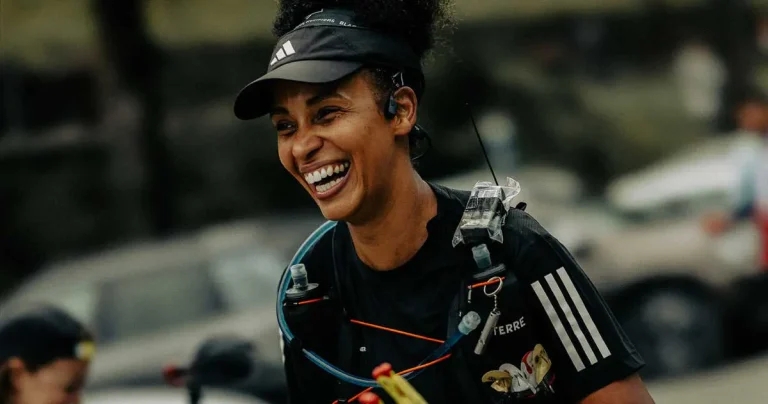
Rebecca Devereux. Image: Tanya Raab
Spend any time at ultramarathons or long-distance races and you start to notice something curious: vets are everywhere.
Jasmin Paris, Sabrina Verjee, Sarah Webster, Rebecca Devereux, Nick Weston – these are just a few veterinary professionals who spend their days in surgery and consulting rooms, while breaking records and making names for themselves in the international world of elite running.
So what’s going on? Is veterinary medicine producing endurance runners – or does endurance sport attract a particular kind of person, and does the veterinary profession happen to draw the same one?

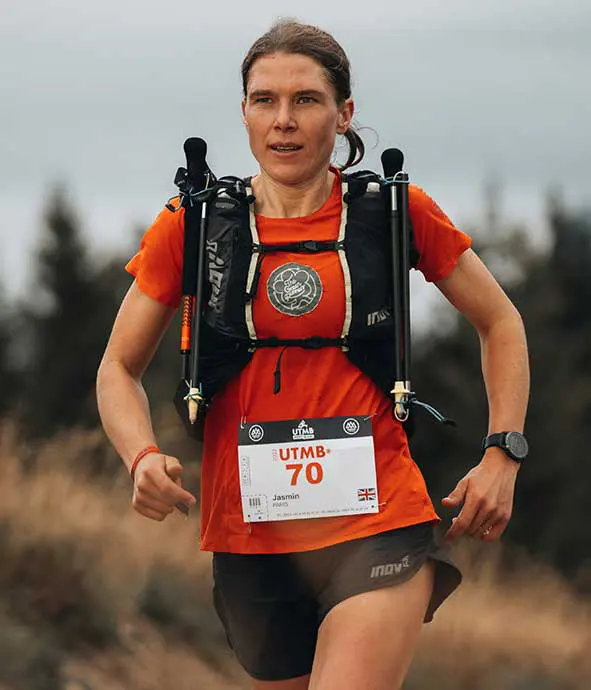
Jasmin Paris MBE, a veterinary clinical lecturer at the Royal (Dick) School of Veterinary Studies, became the first woman to complete one of the most brutal sporting challenges in 2024, the Barkley Marathons, finishing the self-navigated 100-mile race within its 60-hour time limit. Only 20 people have ever done so in the race’s 40-year history.
Jasmin also won the 268-mile Montane Spine Race across the Pennine Way in just over 83 hours in 2019 – pausing mid-race to express breast milk for her baby. And it all started when a vet colleague suggested she try a local fell race in the Peak District.
“I realised quite quickly that I enjoyed longer races,” she says. “And I was kind of good at them.”
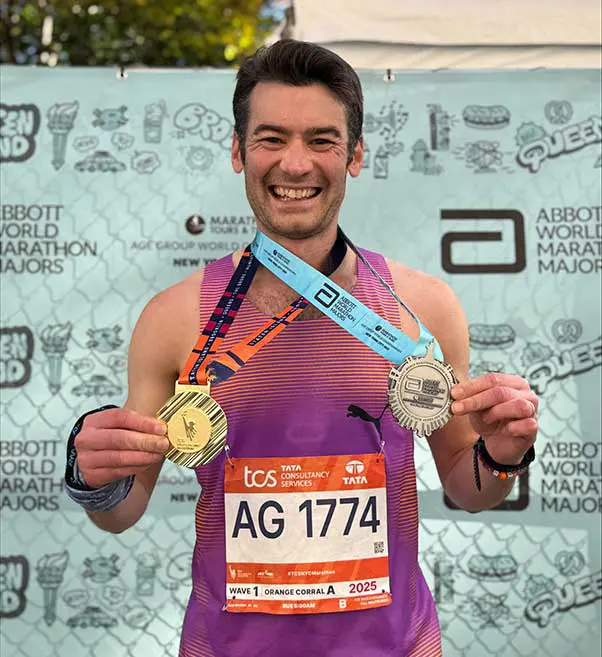
Nick Weston, a small animal vet, running coach and six-time 100-mile ultra finisher, says he’d run regardless of what he did professionally, but thinks the overlap is hard to ignore.
“It continues to surprise me just how many vets are high level endurance runners,” he says. “Vets are generally… process-orientated and love problem solving. Working out the logistics of long and arduous tasks and being comfortable in uncomfortable situations suits the veterinary surgeon’s skill set.”
Richard Simpson, a lecturer in psychology at Leeds Trinity University researching well-being in sport and performance, says this may be less coincidental than it appears. Both contexts, he explains, reward the same personality traits: high conscientiousness, self-discipline and emotional resilience.
Jasmin agrees: “I’m quite driven, I’m quite a perfectionist, I can push myself quite hard. And I think generally some of those features you see more in the veterinary profession. The ability to work under pressure. When you’re on your second night of an ultra and you’re trying to find the way through the Barkley forest or something – there’s definitely similarities there.”
But personality alone can’t explain it. For many vet-runners, endurance sport serves a deeper function – one that helps them blow off steam in a profession under growing strain.
Rebecca Devereux (main picture), an ultra-runner and clinical director of Briar Dawn Veterinary Centre, is clear about what the sport gives her.
“When I’m in practice, I’m constantly spinning plates, juggling clinical work, patients, clients, managing people. Running gives me that space… with minimal distractions.”
She’s also clear that the two worlds aren’t entirely separate.
“Being a vet and running ultramarathons are similar in the fact there’s moments when you feel amazing, but there’s also moments when it’s really hard. Neither are easy. But they are massively rewarding if you put the work in.”
Dr Simpson notes that health care professionals more broadly may turn to endurance sport to develop the qualities that make them succeed at work.
He says: “Psychologists often refer to ‘oxygen mask’ assumption. Which could be why these professions are drawn to the capacious benefits offered by endurance sport.”
Sabrina Verjee is a veterinary surgeon at Carnforth Pet Care. She broke the record for visiting all the Wainwright summits on a continuous round in 2021, and won the Montane Spine Race in 2019 outright – leading from start to finish. She describes running as a “meditative release”.
She explains: “Running provides a way to switch off mentally.
“Rather than focusing on work problems, my attention shifts to the practical challenge of navigating and moving across mountainous terrain.”
All these vets may share certain traits, but they’re not a monolith. Most were drawn to running and exercise long before they started working, either because they enjoyed hiking or because they love the outdoors, so they gravitated towards it.
Perhaps veterinary medicine doesn’t create the impulse to run, but endurance sport offers an outlet for the same self-discipline and resilience the profession demands.
For Sabrina, the appeal lies in the noticeable differences.
She says: “Veterinary practice can be an intense environment, with constant multitasking and competing demands. What I value most about endurance running is the contrast it provides: the simplicity of it.
“Out on the trail, it is just one foot in front of the other.”