

23 April 2025
Building better workplaces: insights on flexibility from the veterinary community
Flexibility is no longer optional – it’s key to thriving in veterinary practice.
As part of our commitment to driving meaningful change in the veterinary profession, Vet Times invited veterinary professional to take part in our Be Heard survey, designed to help us understand the key challenges of working in practice today and what values matter most to vets and nurses. A massive 3,400 responded, with 2,760 completing the survey in full, representing a wide range of roles, experiences, and practice types across the UK.
The results highlight that flexibility is not just a 'nice-to-have' but is a key factor influencing job satisfaction, retention, and overall well-being.
With flexibility ranked as important as salary (scoring an average importance rating of 7.6 out of 10) and work-life balance a top priority no matter what role you're in, it's clear that adapting to flexible work models is essential.
This guide offers a data-driven overview of how vets and nurses define flexibility and what they need from employers.
By embracing flexible work models, you can create more supportive work environments, enhance employee well-being, and ultimately improve the sustainability of your team.
Key findings
- Flexibility is as important as salary
- Work-life balance is a top concern
- Well-being and mental health support is being overwhelmingly asked for across all roles
- 86% of respondents rated flexible working as moderately to highly important
- Independent practices are perceived to offer "more flexible working arrangements" compared to corporate practices.
What does flexibility mean to veterinary professionals?
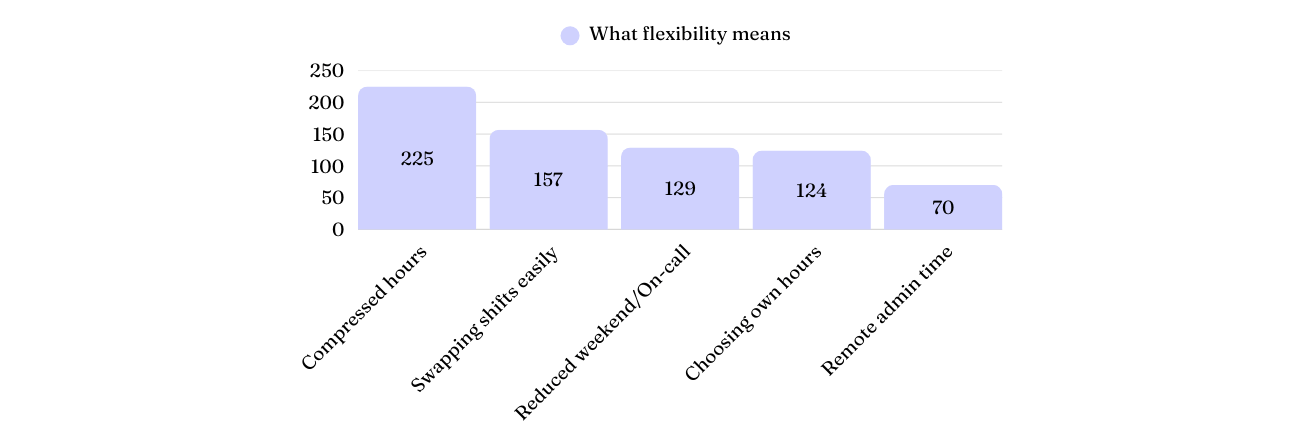
We asked, and the community answered; it’s clear that flexibility extends beyond just hours, truly encompassing a variety of workplace expectations.
- Work-life balance
- Working hours & shift patterns
- Family & childcare responsibilities
- Workplace culture & employer attitude
- Adaptability over time
Flexibility means being treated as a person, not a machine. I need to know I can take time off for my kids without guilt
Survey respondent, Be Heard 2025
It’s a tough time for veterinary practices everywhere right now. There is not only a perceived shortage of qualified vets and nurses to meet the demand for roles, but many of those in practice have fallen out of love with the profession.
Nearly half (43.7%) of all vets expressed a desire to leave the profession within the next five years, citing work-life balance as the main factor, and disliking the physical/emotional impacts of the job (Hagen et al. 2020).
This makes it more critical than ever to understand your team's needs and think beyond just the schedule.
Work-life balance
- Supported by the high number of mentions in the survey (2,259).
- Being treated as humans with lives outside work, not just "money-making units."
- Time off for personal emergencies or important life events.
- A healthier balance between personal and professional life.
- Many respondents highlighted the need to balance weekend and on-call work with personal commitments.

Working hours & shift patterns
- Options for part-time work or compressed hours (e.g. a 4-day week).
- Being able to swap shifts easily within my team.
- Variable shift patterns and non-traditional hours.
- Ability to start late or finish early when needed.
- Choosing shifts/start & finish times.
- Having the option to work remotely for admin tasks.
- Reduced weekend/on-call commitments.

Family & childcare responsibilities
- School pickups and childcare arrangements are key concerns.
- Ability to manage family emergencies and sick children.
- Achieving work-life balance for family time.

Workplace culture & employer attitude
- A "give-and-take" relationship between employer and employee.
- Open discussions about flexibility rather than immediate refusals.
- A team-based approach to covering shifts

Adaptability over time
- While it’s not the highest priority, the ability to adjust working arrangements over time remains important for career longevity.
- Ability to adjust working arrangements with notice.
- Flexibility to change hours throughout different career stages.
- Different arrangements for school terms vs. holidays.

What flexible working looks like
At Vet Times Jobs, we work closely with veterinary practices to help fill their job vacancies. This provides us unique insights into the ways practices have successfully implemented flexible working and how they prioritise work-life balance in their scheduling and policies.
The survey results reinforce that increased control over working hours, shift flexibility, and family support are top factors in overall employee satisfaction. Here’s one example of a unique rota that embraces flexibility to provide the team with a fantastic work-life balance.
Riverside Veterinary Care operates with a full-time rota of a 4-day week, with vets working just 1 in 6 weekends (8:30 am - 6 pm). While this may initially sound pretty standard, the weekends are incorporated into the 4-day week structure, so if a vet works a full weekend, they only work two weekdays. To put this into perspective, that’s only 16 shifts a month!
Further flexibility is offered by the ability to split the weekend with other team members, meaning the vet could work either Saturday or Sunday with three weekdays.
Instead of traditional on-call duties, the vets work one late shift per week (1 pm - 10:30 pm), during which they run an evening surgery and handle any emergencies. After 10:30 pm, calls are forwarded to the out-of-hours provider.
The practice remains fully staffed with both an RVN and receptionists until closing each day, and staff receive a higher rate of pay for any hours worked after 6:30 pm or on weekends.
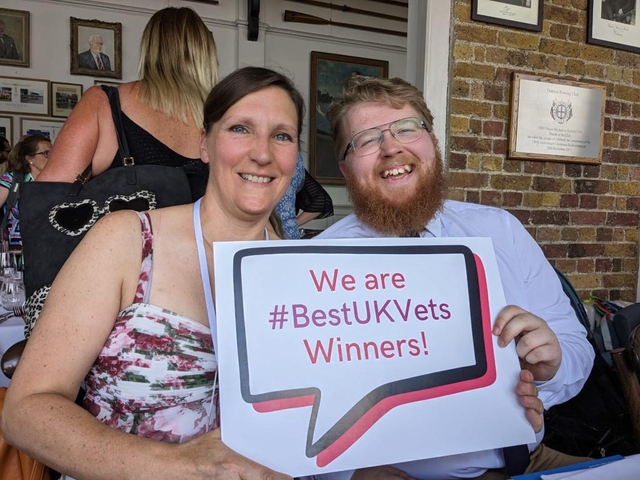

I think limiting the number of shifts per week like this reduces the chance of burnout and avoids the dread that you feel when you know you've got a really intense week coming up. My only surprise is that it's unique!
Bernice, Director & Vet Surgeon
Out-of-hours
With more veterinary professionals looking to achieve a better work-life balance, the practicalities of running an out-of-hours service can be tricky to navigate.
Having a dedicated night team is one option, as is outsourcing your OOH to an external provider. However, for those practices looking to maintain their own OOH service, you often need to think outside the box to create a happier workplace and improve team retention.
One practice we’ve collaborated with, Mount Vets, involved their team in designing an OOH rota that enables everyone to enjoy an excellent work-life balance, including substantial periods with no weekends or duties.
The practice operates a 9-week rolling rota. For 7 of those weeks, the vets work a 4-day week, with no Saturdays, no weekends, and no on-call night shifts. Week 1 includes a Saturday morning consult, followed by on-call duty for the daytime only for the remainder of Saturday and Sunday.
Following this, the vet works a 3-day week. Then, in Week 2, the vet only works nights on call (no day shifts) and a short consulting shift on Saturday morning.
The practice also has dedicated night RVNs to care for any inpatients, allowing the vet to be on-call from home and only come in if required.
Practical suggestions
Conclusion
The results of the Be Heard survey clearly reinforce what we at Vet Times Jobs hear on a daily basis: flexibility is not just about adjusting schedules; it’s about redefining the way work is approached to prioritise the well-being of teams.
Flexibility—whether related to hours, shift patterns, or family responsibilities—is essential for job satisfaction, retention, and the overall well-being of veterinary professionals.
As practices face ongoing challenges, including staff shortages and burnout, adapting to flexible work models is not just a strategic choice but a necessary step in retaining skilled and motivated teams.
By listening to their teams, embracing flexibility, and fostering a culture of open communication, employers can create a more balanced and positive workplace culture that meets the evolving needs of their team, enhances morale, and ultimately ensures the long-term success of the practice.
Let’s start building stronger teams and happier workplaces today. Whether you’re recruiting for a role right now or planning for the future, we’re here to help.
We understand the challenges of finding, managing, and keeping great vets and nurses because we’re part of the veterinary community ourselves. We’re on your side, ready to help you create a workplace where people want to stay and grow.