
6 Apr 2026
Cats Protection officials said they were “disappointed” the Government’s Animal Welfare Strategy did not commit to regulating cat breeding.

Chris Simpson
Job Title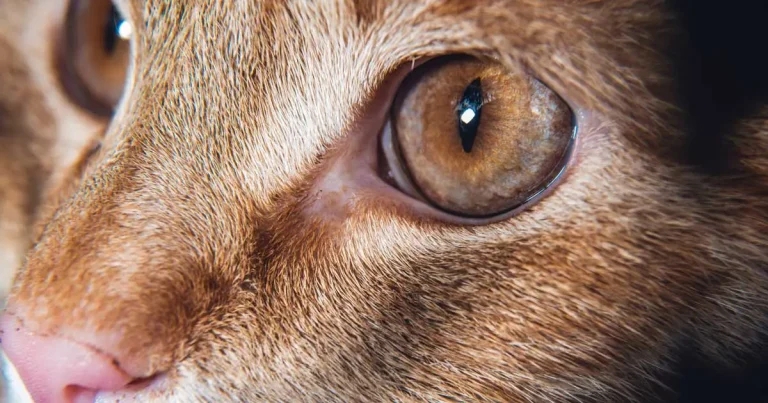
Image: Sasha / Adobe Stock
Immediate action is required to deal with the increasing acquisition of cats with extreme conformations in the UK, charity officials have warned.
Speaking on the Vet Times Podcast, Cats Protection’s associate director of advocacy, campaigns and external affairs, Madison Rogers, discussed the charity’s push for cat breeding to be regulated across the country.
Asked if now was the perfect time to urge legislative change, following the Government’s unveiling of its new Animal Welfare Strategy in December, she said: “On this issue, we’re really facing a ticking time bomb. We’ve talked a lot about dogs, and the issues are prolific in the dog market, with dogs with extreme characteristics.
“We’re not, thankfully, at that stage with cats, but we can really see that could become a future… in as short as five to 10 years, because of the way that these trends have picked up since the pandemic.”
According to the charity’s latest Cats and Their Stats report, pedigree or purebred cats made up 51% of UK cat acquisitions between 2024 and 2025, an increase from 45% the previous year and from 35% since 2020. Meanwhile, acquisition of non-pedigree cats has fallen from 51% in 2020 to 38% in 2025.
Miss Rogers added: “We really want the Government to act now. In all honesty, we were disappointed with the Government Animal Welfare Strategy because it didn’t include a commitment to regulate cat breeding.”
In response, a Defra spokesperson said: “The Government is working with the sector to improve our understanding of welfare concerns relating to cat breeding, to inform whether any further action is needed in the future. Alongside this, we have committed to improving uptake of pet-selling licences.”
The charity has accrued more than 61,000 signatures on a petition to regulate cat breeding and end breeding of cats with extreme characteristics.
Cats Protection feline welfare researcher Claire Roberts recently conducted a review of welfare concerns associated with purebred cats with extreme features. She found extreme conformations were variously associated with musculoskeletal abnormalities, ocular, dental and respiratory issues, impaired mobility and chronic pain.
Miss Rogers said the paper was “key evidence”, but added: “It does take a long time to provide evidence, so sometimes I think [the] Government need to make a decision with what’s available now to ensure that these problems don’t get worse, and then it becomes a lot harder to be able to solve them, and frankly, a lot more animals suffer.”
Dr Roberts argued evidence for cats was “lagging behind” compared with dogs.
Giving the example of dwarf cats such as the Munchkin, she said: “Personally, it seems obvious that these cats aren’t able to do the behaviours of normal cats.
“We haven’t yet proved it scientifically, but that doesn’t mean that there’s not an issue, so I just wanted to note that absence of evidence is not evidence of absence.”
She added it is “impossible” for Scottish fold cats – whose folded ears result from defective cartilage that impacts bone development – to meet minimum welfare standards.