
5 Jun 2026
The association’s guidance states ‘the evidence is unequivocal’ that six-month boosters provide better protection than administering annually.

Chris Simpson
Job Title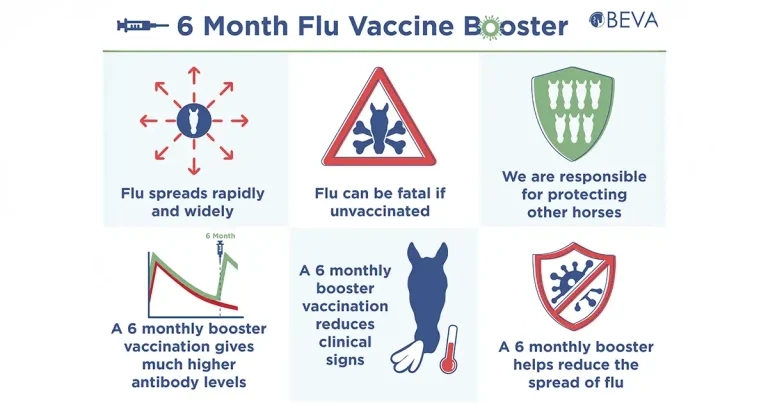
BEVA's six month equine influenza vaccination guidance.
BEVA has urged vets to discuss implementing six-monthly vaccine boosters for equine influenza (EI) with clients amid rising cases in the UK.
The association issued the reminder on social media and pointed members toward its vaccination guidance.
The guidance states that while “science advances, ‘label claims’ rarely do”, adding: “The evidence is unequivocal that in higher risk populations better protection is afforded by vaccinations at six-monthly intervals rather than 12.”
A total of 74 laboratory-confirmed EI outbreaks have been reported since the start of April in the latest Equine Infectious Disease Surveillance (EIDS) update, issued on Thursday (28 May), with a further 26 incidents suspected.
Of the confirmed outbreaks, 46 (62%) were unvaccinated, 18 (24%) were of unknown vaccination status, 8 (11%) were confirmed to have been vaccinated, and 2 of the 74 confirmed cases were a mix of vaccinated and unvaccinated.
Lucy Grieve, veterinary projects officer at BEVA, said: “Equine influenza is spreading rapidly across the UK… and this is exactly why BEVA is urging equine vets to remind horse owners of the benefits of six-month vaccination boosters.
“We know that giving a six-month booster raises the antibody levels back up to a level which helps reduce clinical signs and limit onward transmission of the virus.
“This is particularly important for horses that are travelling, competing or mixing with other horses.
“Vets have a vital role in encouraging clients to move beyond seeing flu vaccination as simply a competition requirement and instead recognise it as a key responsibility in protecting both individual horses and the wider equine population during this current surge in cases.”
The ongoing outbreak has prompted the British Horseracing Authority to restrict raceday course admission solely to horses from licensed training yards, while other top equestrian sporting bodies have warned horses will not be allowed to compete in their competitions if they are not properly vaccinated.