
12 May 2026
Veterinary telehealth company Dutch bosses called AVMA’s stance on telemedicine “extremely discouraging”.

Chris Simpson
Job Title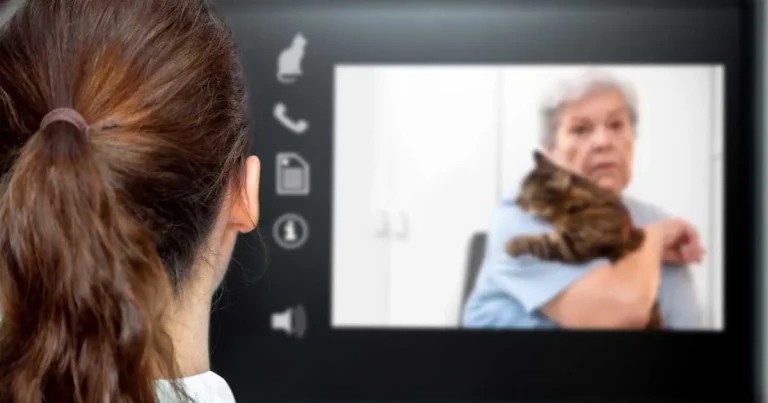
Image: M.Dörr & M.Frommherz / Adobe Stock
The American Veterinary Medical Association (AVMA) has hit out at calls to ease regulations around veterinary telemedicine, arguing it poses a risk to public and animal health.
In its recent Pet Care Gap Report, veterinary telehealth company Dutch estimated 75 million pet owners in the United States have skipped or denied vet care for cost or access reasons, based on responses from two in five of its more than 10,000 survey participants.
Company founder Joe Spector suggested telemedicine offers an affordable and accessible solution “when used responsibly alongside in-person care” and called for it to be more widely accepted across the US, arguing “the biggest barrier to veterinary telemedicine isn’t demand, it’s regulation”.
State regulations governing whether a vet-client-patient relationship (VCPR) can be established via telemedicine vary, but the AVMA warned against easing them and questioned several figures in Dutch’s report, a response company bosses described as “extremely discouraging”.
In a statement, the AVMA said that veterinary telemedicine is “already readily available”, being allowed in all US states and territories.
It continued: “AVMA strongly believes that allowing a [VCPR] to be established electronically, [namely] without first conducting an in-person evaluation, weakens important safeguards that protect animal and public health.
“An in-person visit is necessary to establish the VCPR before a veterinarian can safely diagnose or prescribe.”
The AVMA said that while telemedicine “offers meaningful benefits”, reliance on owner-reported information and remote observation “increases the risk of misdiagnosis, delayed care and inappropriate treatment” as well as the chances of missing zoonotic or contagious diseases.
The association added it is “concerned about telemedicine platforms that combine telemedicine with online drug sales and aggressively encourage pet owners to request prescriptions without first seeing a veterinarian in person” and argued “the ability to use drugs both on-label and extra-label comes with tremendous responsibility and carries real risk if not done correctly”.
It concluded: “Telemedicine has an important role – but only after a VCPR is established in person. Anything less puts patients, clients and the public at unnecessary risk.”
Addressing claims within the report, the association argued the 75 million figure “is derived from a chain of flawed assumptions” and “combines misreported pet population projections, an unsupported claim of a 16% veterinarian shortage, and a critical misinterpretation of data”.
It said the calculation equates pets not visiting a vet in the past year with those receiving no care at all and “assumes a one-to-one relationship between veterinarian availability and care delivery, ignoring the broader ecosystem of veterinary services”.
In response, Dutch suggested its 75 million estimate was “conservative”, based on AVMA figures of around 163 million cats and dogs in the country and recent data from global analytics firm Gallup suggesting 52% of US pet owners reported skipping or declining vet care in the last year, although only 15% reported doing so due to barriers.
In contrast to Dutch’s claim that the average cost of care is now reaching up to US$3,000 annually per pet, AVMA reported that in its 2025 Pet Ownership Survey and Demographic Sourcebook, pet owners spent US$560 in a typical year for veterinary care and US$1,727 for all pet-related expenditures.
Dutch argued its figure reflects that while average routine care costs between US$500 and US$800 annually, total costs can be pushed significantly higher with a single emergency, dental cleaning or chronic condition.
Chief medical officer Kate Elden added: “The AVMA’s scrutiny over this data point minimises the larger issue: the rising cost of care, and the millions of pets who won’t see a vet at all as a result.
“Vet visits have been down for 16 quarters straight, and vet prices are rising at almost 2 times the rate of inflation. Telemedicine is a real solution to this challenge.”
Dr Elden argued the “suggestion that we’re pushing pharmacy on pet parents at Dutch misunderstands how care is delivered here” and added: “I can say with confidence that the way Dutch is structured, where vets aren’t compensated based on what they sell, is a meaningful part of why so many of us have chosen to practice here.”
At AVMA’s argument that allowing a VCPR to be established solely electronically weakens safeguards protecting human and animal health, she concluded: “Restrictive telemedicine laws contribute to the erosion of trust in veterinarians.
“It’s extremely discouraging to see a veterinary organisation place so little faith in its members’ medical decision-making.
“We take an oath to protect and care for animal well-being; our judgment should be considered and trusted to uphold that oath across the board.”