
1 May 2026
Charity bosses have called for a nationwide ban after the statewide ruling in Bahia.

Vet Times
Job Title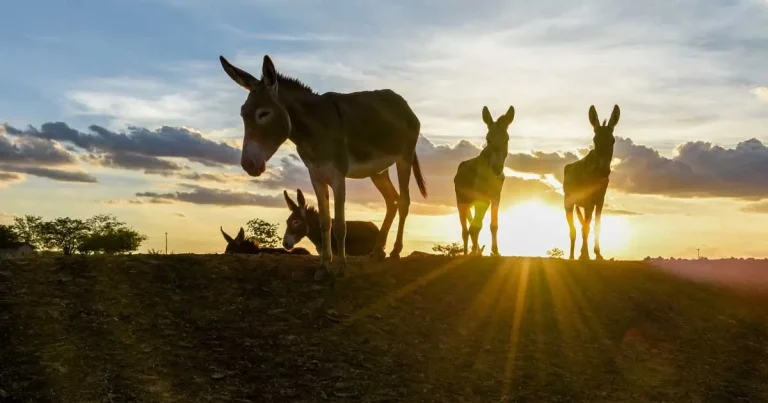
A federal court in Brazil has issued a “landmark” ruling said to force the closure of the country’s last major donkey slaughter operation.
In April, the court ordered the immediate suspension of donkey slaughter in Bahia, one of the country’s largest and most populous states, with federal judge Arali Maciel Duarte citing evidence of animal cruelty, serious biosecurity failings and a concrete risk of species loss.
Amargosa in Bahia is home to Brazil’s last remaining major donkey slaughter facility, and the ruling mandates the removal of animals from slaughterhouses, farms and transport operations linked to these operations.
The ruling follows public civic action brought by a coalition of Brazilian animal welfare organisations and The Donkey Sanctuary, but does not automatically extend to other Brazilian states or require slaughterhouses to close, provided they operate lawfully with other species.
Citing data from the Brazilian Institute of Geography and Statistics and Agrostat, The Donkey Sanctuary said the country’s donkey population fell by 94% between 1996 and 2024.
The mechanisation of agriculture and the replacement of donkeys with motorised vehicles have reduced their utility as working animals, and The Donkey Sanctuary also cites the demand for ejiao, a traditional Chinese medicine made from donkey collagen.
The charity estimates around 5.9 million donkeys a year are slaughtered for the skin trade – a figure it expects to rise to 6.7 million by 2027.
Biologist Patricia Tatemoto, The Donkey Sanctuary’s nominated Skins Campaign coordinator based in Brazil, said: “This is a moment to be proud. The federal court has made a landmark decision to protect the nation’s donkeys, animals who have great cultural significance for the people of Brazil.
“Scientists have long warned this exploitative trade threatens to drive our donkeys to extinction, and it is profoundly encouraging to see lawmakers stand alongside them in condemning such cruelty.”
Dr Tatemoto called for a national ban, while the charity’s regional director for Latin America and the Caribbean, Eduardo Santurtun, said the ruling “sends a powerful signal across the region”.