
26 Oct 2026
Officials discussed key legislation affecting clinicians and pet owners including the Rural Veterinary Workforce Act, People and Animals Wellbeing Act and the Pets Belong with Families Act.

Chris Simpson
Job Title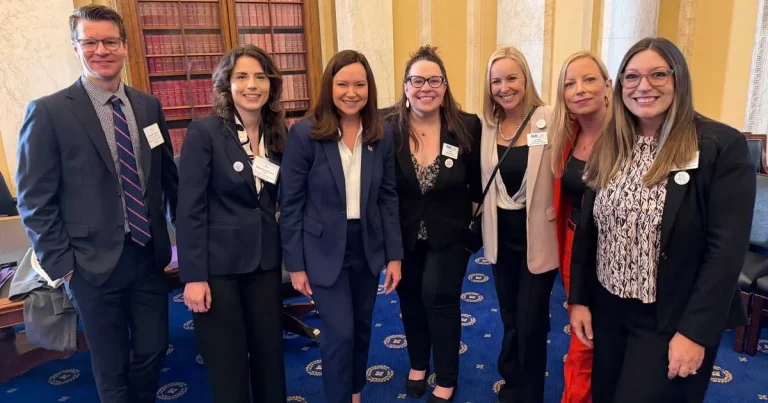
Pictured (from left) are Brandon Fuller, Madeleine Mulford, senator Ashley Moody (Florida), Ellen Edmonds, Summer Graziano, Erin Weber and Danna Griffin.
The North American Veterinary Community (NAVC) said it had “productive conversations” with lawmakers as it conducted a legislative fly-in to Washington DC.
NAVC officials met members of Congress at Capitol Hill to advocate for key legislation affecting veterinary professionals and pet owners as part of Pet Week, hosted by the Human-Animal Bond Research Institute.
The team, led by chief executive Gene O’Neill, met with several state representatives to discuss legislation including the People and Animals Wellbeing Act, a bill to include veterinary care and pet insurance expenses under health savings accounts and flexible spending accounts.
Officials also discussed the Rural Veterinary Workforce Act, designed to address workforce shortages throughout the country, and the Pets Belong with Families Act, which would remove restrictions on pets based on breed, size, or weight in federally funded public housing.
Mr O’Neill said: “NAVC is committed to supporting veterinary professionals in their pursuit of providing the highest quality care possible.
“We primarily do this through education, but advocacy is also a key component of our mission. The human-animal bond is scientifically proven to improve the health of people and pets.”
Danna Griffin, NAVC’s senior director of communications and advocacy, added: “As part of our mission, NAVC has the privilege of working closely with veterinary professionals.
“We see their commitment and desire to provide the best care to animals and the people who love them. Having the opportunity to advocate of the behalf of those individuals is an honour.
“We had productive conversations this week with key decision-makers, and I am hopeful our efforts will result in positive outcomes for pets, their owners, and our veterinary community.”