
13 Feb 2026
Vets increasingly treating cases of the disease said to be “severely at risk of coming into the rest of Europe”.

Chris Simpson
Job Title
The shelled ruins of a veterinary practice in Dnipro, Ukraine.
Vets in Ukraine have issued a desperate plea for medicines, equipment and funds to help them combat the increasing threat of rabies brought on by the ongoing war with Russia.
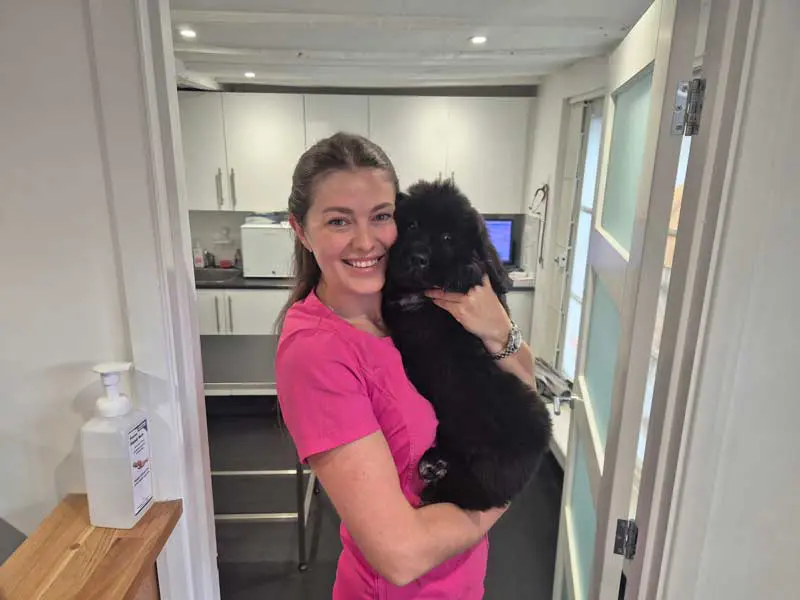
Ahead of the fourth anniversary of Russia’s invasion (24 February), Ukrainian vet Daria Ponomarenko (pictured) and ProSalus Foundation vice-president Mark Johnston launched an urgent donation appeal on the Vet Times Podcast.
Dr Ponomarenko, a cardiologist and doctor of visual diagnostics from Zaporizhzhia, arrived in the UK with her family in September 2025, with the war’s front lines rapidly approaching her Sviy Likar clinic.
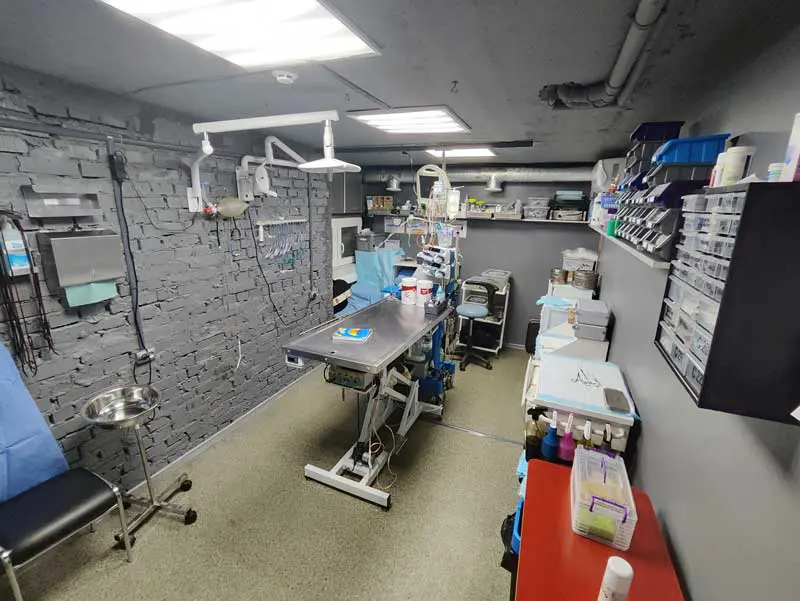
The clinic was forced to move its surgery room and diagnostics equipment underground for safety in the event of Russian shelling, while intermittent electricity can leave the team without power for upwards of 18 hours per day.
She said: “A lot of our colleagues lost their clinics because they were on the first or second floor, and now we have a good chance to survive, our equipment, our staff, because now we use the basement.”
Despite the difficulties, she continued to volunteer for projects led by the Ukrainian Small Animal Veterinary Association (USAVA).
Dr Ponomarenko said: “My husband sometimes says I’m crazy, because last year I was nine months pregnant, and we did spay surgery for our project with USAVA and we went to the grey zone.
“It was around our old school. Everything was destroyed, and we did 50 spays for cats in one day. One surgeon and one assistant, one anaesthesiologist and one receptionist, five minutes per cat from first incision to intradermal stitches.”
She said spirits have been high despite the “really difficult” working conditions, but warned rabies – which her clinic had two incidents of last year – is a growing concern.
Dr Ponomarenko added: “People can live in different conditions, so it’s our life now. We’re joking, we’re smiling (…) but the [biggest] problem now is the rabies question.”
The vet revealed the “really dangerous” challenge of treating animals not knowing whether their symptoms are rabies or barotrauma from rocket attacks.
She said: “If you are a vet, you [don’t] use your brain, you use your heart to help animals. But now you should turn on your brain and understand, could you help these animals or should you just leave them? And you never know if it is the right decision or not.
“It’s a really difficult profession, and if you don’t love it, you couldn’t be in this area. You couldn’t be, because it’s always hard.
“It’s life, it’s tears, it’s allness and everything. But now it’s one more difficult decision in your life. But (…) we can stop it [with vaccination].”
Ukrainian officials reported rabies cases more than doubled between 2022 and 2023 due to a pause in vaccination efforts.
Wild animals fleeing the front lines are also mixing with stray animals, which are taken in and presented to vets.
Dr Johnston, who travelled to Kyiv last year, met vets whose colleagues have died from contracting rabies, and others who were serving as combat medics and fighting on the front line as well as running their clinics.
He said while the government is preserving limited vaccine stocks for people who have been bitten, “veterinarians are seeing cases before that, and they are not protected”, and that “the danger of [vets] being bitten is extraordinarily high”.
He described rabies as a “silent killer” and warned the WHO’s “Zero by 30” ambition of zero human dog-mediated rabies deaths by 2030 has been “blown apart, literally”.

Dr Johnston continued: “This is genuine concern that a truly terrible, preventable disease is wreaking havoc in Ukraine, both in human health and animal health, and it is severely at risk of coming into the rest of Europe.”
With the Ukrainian government seconding much of it for human use, he added vets “don’t have the equipment, the medication and consumables that they so desperately need to carry out veterinary treatment.”
He concluded: “We’re dealing with some extremely brave, resilient and wonderful people, and I would really urge us all to think what can we do and invite those people please to contact me.”
Veterinary professionals can donate medicines, equipment and supplies, or make a financial donation, at the ProSalus website or by contacting Dr Johnston at [email protected]
Daria Ponomarenko and colleagues treating a horse after a missile attack in Ukraine.