
10 Apr 2026
Studies showed Strangvac gave “rapid onset” of protection and highlighted importance of differentiating infected and vaccinated animals.

Chris Simpson
Job Title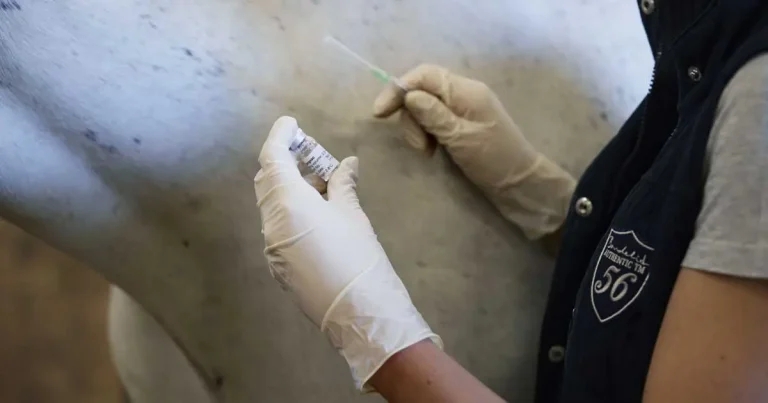
New studies have demonstrated the effectiveness of vaccinating against equine strangles.
A pair of studies documented outbreaks on two separate yards in Sweden where attending vets administered Strangvac.
The first, published in the Equine Veterinary Journal, featured a strangles outbreak on a farm with 20 horses.
While three unvaccinated horses were clinically affected – two of which were euthanised after developing severe clinical signs – none of the 17 vaccinated horses became ill, despite eight subsequently testing seropositive for exposure.
The authors suggested their data “for the first time, provide serological evidence suggesting a protective effect where the vaccination of healthy horses with Strangvac in an outbreak was associated with an absence of clinical disease in this cohort”.
The second paper, published in Animals, comprised a retrospective study of an outbreak following the arrival of a new horse at a yard that had no reported history of strangles or other respiratory diseases.
On the same day the new horse – believed to be responsible for the outbreak – arrived, 13 of the 17 resident horses received their first dose of Strangvac.
While three of the vaccinated horses developed mild clinical signs of disease, one of which subsequently tested positive for strangles, none of the vaccinated horses developed clinical signs of strangles after the second dose of vaccine.
Eight of the 18 horses showed serological evidence of exposure.
The authors noted: “The data suggest that rapid onset of immunity following vaccination, combined with biosecurity measures, likely reduced transmission and minimised the severity and duration of the strangles outbreak.”
Both papers noted Strangvac’s ability to differentiate infected from vaccinated animals, with the latter observing that allowing the identification of vaccinated horses exposed to strangles “is important to direct contingency plans for outbreak prevention and management”.
Strangles is said to be able to affect all horses on a farm and lead to death in up to 10% of cases depending on immunity status at the time of infection, the development of complications, the success of biosecurity measures, and the use of vaccination.
Surveillance of Equine Strangles network data reported 477 total diagnoses in 2025, up 77% from 270 cases in 2024 and 120% from 217 cases in 2023.
Pharmaceuticals company Dechra, the manufacturer of Strangvac, conducted conducted a survey of horse owners last year that found that almost half (45%) of respondents were unaware a vaccine for the disease was available and 59% reported their vet had not discussed strangles vaccination with them.
Dechra veterinary advisor Bex Glasgow said: “The UK experienced a steep rise in strangles cases last year.
“Strangles vaccination, alongside good biosecurity measures, are essential tools in disease prevention and recent studies have also demonstrated its protective effect during outbreak situations.”
The company is supporting Strangles Awareness Week, taking place from 4 to 10 May, which promotes “BEST” practice to prevent its spread: boosting immunity with vaccination, engaging with trusted information, separating unfamiliar horses, and temperature checking routinely.